|
|
 |
|
One Health News |
| |
|
| |
| Found 1196 Matching Results. View archived News Here. |
|
|
|
| New CDC information on Salmonella Outbreak and Key AR Investments - U.S. Centers for Disease Control and Prevention (CDC) sent this bulletin at 01/29/2018 - Monday, January 29, 2018 |

New CDC information on Salmonella Outbreak and Key AR Investments
Centers for Disease Control and Prevention (CDC) sent this bulletin at 01/29/2018 09:54 AM EST
Highlights of our recent work to prevent the spread of infectious diseases
January 2018

It is hard to believe that 2018 is underway! I am excited for the opportunities this year will bring.
Did you know that there are three simple things you can do to stay in-the-know about CDC’s work to prevent and control emerging and zoonotic infectious diseases?
- Follow @CDC_NCEZID and me on Twitter
- Share this e-mail newsletter with friends, family, and coworkers, and let them know they can sign up for updates too!
- Check out our website for the latest on what we do to protect people at home and around the world from emerging and zoonotic infectious diseases.
I wish you a happy, safe, and healthy 2018!
Rima Khabbaz, MD
Director, CDC’s National Center for Emerging and Zoonotic Infectious Diseases
|

CDC and state and federal partners are investigating a multistate outbreak of Salmonella infections linked to frozen shredded coconut.
On January 3, 2018, Evershing International Trading Company recalled all 16 oz. bags of Coconut Tree Brand frozen Shredded Coconut.
CDC recommends retailers not sell, restaurants not serve, and consumers not eat recalled product.
|
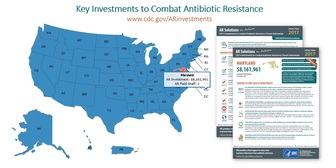
CDC released new data in its Antibiotic Resistance (AR) Investment Map, which shows early progress by states to combat AR. This year’s AR Investment Map features more than 170 state-reported successes—like rapidly identifying and containing rare and concerning resistant germs to protect communities—with each state reporting multiple successes.
These are the first comprehensive reports on state progress made following the first year of Congress’ unprecedented investment in CDC’s Antibiotic Resistance Solutions Initiative.
|
|
|
|
|
| Why antibiotics are becoming less effective – the One Health approach - Saturday, January 27, 2018 |
Why antibiotics are becoming less effective – the One Health approach
Why antibiotics are becoming less effective – the One Health approach
Politics.co.uk
This is because bacteria, viruses, parasites and fungi are evolving to outsmart the drugs used to kill them. Scientists call this process antimicrobial resistance – or AMR. AMR is a naturally occurring phenomenon, but the way we are using antibiotics is making it worse. The World Health Organization says ...
http://www.politics.co.uk/opinion-formers/chatham-house/article/why-antibiotics-are-becoming-less-effective
|
|
| ISDS One Health Symposium - Challenges and Solutions to Implementing One Health - Wednesday, January 24, 2018 |
ISDS One Health Symposium - Challenges and Solutions to Implementing One Health

January 30th, 2018, Rosen Plaza Hotel, Orlando, Florida
ISDS is pleased to expand our One Health tracks from the Annual Conference into a full-day symposium with leading experts presenting on One Health disciplines. This conference is geared for practitioners in veterinary medicine, environmental and public health fields whose success relies upon expertise in cross-disciplinary best practices of One Health. The conference theme of addressing challenges to implementation of One Health will run through the day's presentations.
Program
The morning sessions will include a keynote address from One Health expert Laura Kahn, MD plus three update presentations from CDC, USDA and the United Nations Food and Agriculture Organization.
The afternoon will feature three panels on Antimicrobial Resistance, Overcoming One Health Barriers, and Food Security. Each panel will feature three experts, each of whom will give a brief presentation and then participate with an audience Q&A session.
Schedule
Below is the program schedule for the One Health Symposium. As with any conference, it is subject to minor changes. This page will maintain the most current information on the program and speakers.

Included
Coffee breaks and lunch are included in the registration fee.
One Health at the ISDS Conference
The ISDS Annual Conference offers a robust track of One Health presentations and posters which will all be scheduled for the day immediately following the One Health Symposium. Attendees to the One Health Symposium are encouraged to consider staying at least one extra day to attend the start of the ISDS Conference. See information on discounts below.
Special Discounts
All persons attending the One Health Symposium will be eligible for a discount on either one-day or full conference registration rates for the ISDS Annual Conference. Full-time students and persons from Developing Countries (see list) also enjoy deep discounts from standard registration rates for any combination of conference registration.
Register
Registration is open, and the best rates are available through December 15, 2017. Simply click the button below to begin your registration.
Sponsorship
ISDS welcomes support from corporate sponsors who wish to be associated with the advancement of our One Health agenda. We offer opportunities for sponsorship of individual sessions, plus meals and social events. Please go to the Sponsor Page or contact Mark Krumm to express interest.
One Health Surveillance Community of Practice
The Symposium is being organized with the support of the ISDS One Health Surveillance (OHS) Community of Practice and its members. For more information about the group and how to join the OHS CoP, visit the OHS group page.
|
|
| Did You Know? U.S. CDC Helps Countries Prioritize Their Top Zoonotic Diseases - Friday, January 19, 2018 |
Did You Know? CDC Helps Countries Prioritize Their Top Zoonotic Diseases
Centers for Disease Control and Prevention (CDC) sent this bulletin at 01/19/2018 03:00 PM EST
|
Saving Lives, Protecting People.
Having trouble viewing this email? View it as a Web page. |
 |
|
Centers for Disease Control and Prevention | National Center for Emerging and Zoonotic Infectious Diseases | One Health Office
|
| |
|
|
|
Did You Know?
CDC Helps Countries Prioritize Their Top Zoonotic Diseases
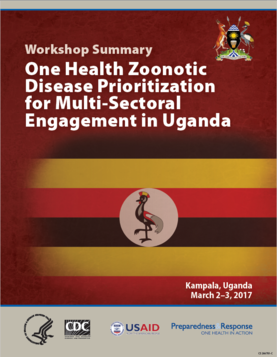
Did you know that CDC’s One Health Office works with countries and partners around the globe to prioritize zoonotic diseases of greatest national concern? CDC experts lead One Health Zoonotic Disease Prioritization Workshops for countries that want to prioritize a list of their most urgent zoonotic disease threats. These workshops bring together experts from many different areas who work to protect the health of people, animals, and the environment. Workshop participants collaborate to identify a country’s top zoonotic diseases to target for One Health collaborations and develop strategies to tackle the newly prioritized zoonotic diseases.
Prioritizing diseases helps countries focus their resources, allowing them to better prevent, detect, and respond to the prioritized diseases and protect human and animal health. To date, CDC has helped 18 countries conduct prioritization workshops on four continents. Zoonotic diseases commonly prioritized include rabies, zoonotic influenza viruses, viral hemorrhagic fevers such as Ebola virus and Rift Valley fever, brucellosis, and anthrax.
Learn more about the One Health Zoonotic Disease Prioritization process
Questions? Email onehealth@cdc.gov.
|
Find updates about One Health, diseases spread between humans and animals, new infographics, and much more on our homepage.
|
|
|
|
|
| DUKE UNIVERSITY (USA): An outstanding, informative One Health University program (and website) with a global health orientation and outreach… - Wednesday, January 17, 2018 |
An outstanding, informative One Health University program (and website) with a global health orientation and outreach…
Duke University (USA)
What is One Health?
With rapid transportation of people, animals, and food, now the norm in many world economies, we are facing new complex zoonotic diseases and food safety problems on a scale never seen before. To respond to and control these problems, we will need new approaches. One Health, an interdisciplinary approach that encompasses animal, human, and environmental health, has been embraced as a way forward by many groups of professional experts. It is a worldwide strategy for advancing health care in humans, animals and the environment through communication and collaboration between multiple disciplines with the realization that human, animal, and environmental health are all connected.
The Duke One Health team serves as a base for the rapidly expanding Duke research portfolio in One Health, as well as a hub for encouraging ongoing campus-wide research activities in this field. Duke has an expansive academic and clinical network both domestically and abroad. This team provides a strong, interdisciplinary base for ongoing One Health activities across this network.
Interest in One Health is Widespread:
-
Worldwide 65 academic institutions have some sort of a One Health program with 14 (22%) having a One Health certificate, masters or PhD program
-
Additionally, 68 nonacademic organizations have a One Health program. ...
See complete website https://sites.globalhealth.duke.edu/dukeonehealth/
|
|
| The 5th International Congress Scientific Programme Committee on Antimicrobial Resistance Saskatoon, Canada June 22-25, 2018 - Monday, January 15, 2018 |
5th International One Health Congress Saskatoon, Canada June 22-25th 2018
Scientific Programme Committee on Antimicrobial Resistance
SEE: https://onehealthplatform.com/iohc/committees/scientific-programme-committee-on-antimicrobial-resistance
*Laura H. Kahn, MD, MPH, MPP - Research Scholar, Program on Science and Global Security, Woodrow Wilson School of Public and International Affairs, Princeton University; Columnist, Bulletin of the Atomic Scientists and a co-founder of the One Health Initiative team
**David L. Heymann, MD – Editor, Control of Communicable Diseases Manual, Director, U.K. Health Protection Agency (United Kingdom) and a member of the One Health Initiative team’s Advisory Board http://www.onehealthinitiative.com/advBoard.php
|
|
| A very significant One Health Alliance: Clinical Translational Science Award One Health Alliance (COHA) - Thursday, January 11, 2018 |
A very significant One Health Alliance https://ctsaonehealthalliance.org/
Clinical Translational Science Award One Health Alliance (COHA)
Advancing the understanding of diseases shared by humans and animals
Menu
ONE HEALTH
One Health is the integrative effort of multiple disciplines working together locally, nationally, and globally to attain optimal health for people, animals, and the shared environment.
Our Mission
The Clinical and Translational Science Award One Health Alliance (COHA) is comprised of veterinary schools partnered with medical and other colleagues through a National Institutes of Health Clinical Translational Science Award (CTSA). COHA’s mission is to advance our understanding of diseases shared by humans and animals. The alliance leverages the expertise of physicians, research scientists, veterinarians, and other professionals to find solutions for medical problems and to address the well-being of humans, animals, and the environment. This approach will capitalize on One Health opportunities that accelerate translational research.
Our Member Institutions
-
Auburn University
-
Colorado State University
-
Cornell University
-
North Carolina State University
-
Purdue University
-
The Ohio State University
-
Tufts University
-
University of California Davis
-
University of Florida
-
University of Minnesota
-
University of Missouri
-
University of Pennsylvania
-
University of Wisconsin Madison
|
|
| Ten Years of Important documented One Health highlights...still valid today: ONLY Tip-of-the-Iceberg! - Tuesday, January 09, 2018 |
Why One Health?
Ten years of Important documented One Health highlights...still valid today: ONLY Tip-of-the-Iceberg!
Editor’s note: By definition, “In a jury trial, a directed verdict is an order from the presiding judge to the jury to return a particular verdict. Typically, the judge orders a directed verdict after finding that no reasonable jury could reach a decision to the contrary.”
The following, in addition to other documented examples https://goo.gl/F7AbK2 [and many others in numerous publications], including endorsements of One Health/One Health Approach by a large cadre of reputable national and international individuals, organizations and institutions http://www.onehealthinitiative.com/supporters.php & https://goo.gl/yJSXyZ, would likely lead most, if not all, presiding judges to issue a directed verdict in favor of One Health/One Health Approach implementation forthwith!
September 2017:
MOST RECENT, SEE Renowned Physician Interventional Cardiologist Endorses One Health Concept http://www.onehealthinitiative.com/news.php?query=Renowned+Physician+Interventional+Cardiologist+Endorses+One+Health+Concept+
August 2016: Former director, Center for Veterinary Medicine, U.S. Food and Drug Administration, speaks at Library of Congress https://www.youtube.com/watch?v=3N3FPcZ1uhg&t=102s...cogently discussing (about 56 minutes) interconnections of human and animal health with environmental health. Pointed out was that no one discipline or sector of society has enough knowledge and resources to prevent the emergence or resurgence of diseases in today's globalized world. This "One Health" concept is a worldwide strategy for expanding interdisciplinary collaborations and communications in all aspects of health care for humans, animals, and the environment
October 2015: Hudson Institute Report NATIONAL BLUEPRINT FOR BIODEFENSE:
Report in full: https://www.ecohealthalliance.org/wp-content/uploads/2016/03/A-National-Blueprint-for-Biodefense-October-2015.pdf
TABLE 1: RECOMMENDATIONS AND ACTION ITEMS Integrate animal health and One Health approaches into biodefense strategies.
Recommendation 7a Institutionalize One Health. ... III. RECOGNIZING AND INSTITUTIONALIZING THE ONE HEALTH CONCEPT See pages 19 & 20
“...A One Health approach can also inform priorities for human infectious diseases. When it became clear in 2014 that no countermeasures for Ebola were ready for the largest Ebola outbreak the world had ever seen, many policy conversations that followed were about priorities. We must have a means of determining what to fund with finite resources. The threats and risks among agents of both bioterror and emerging infectious diseases are equally serious. MTDs have been very important for the prioritization of activities around biodefense, yet there is no analogous prioritization system for emerging diseases....”
December 2014: “The business case for One Health” - Onderstepoort Journal of Veterinary Research 81(2), 6 pages – Open Access http://www.ojvr.org/index.php/ojvr/article/view/725/993
September 2013: Visionary landmark article “Vaccines against diseases transmitted from animals to humans: A one health paradigm” by medical virologist and vaccinologist physician http://www.sciencedirect.com/science/article/pii/S0264410X1301270X notes principles of utilizing the One Health approach, i.e. multidisciplinary/interdisciplinary collaborations between animal health and human health industries and regulators can definitely help develop immunization products for such purposes. gives reasonable guidelines to make it happen sooner rather than later. Examples: including West Nile, brucellosis, Escherichia coli, O157:H7, rabies, Rift Valley fever, Venezuelan equine encephalitis, Hendra virus, Mycobacterium bovis, and Lyme disease. Indeed, another September 2013 publication was published that discussed the dramatic food safety potential for using a vaccine in cattle to protect against human foodborne illness caused by E. coli, O157 http://www.pnas.org/content/early/2013/09/10/1304978110.full.pdf+html
November 2012: American Association of Public Health Physicians (AAPHP) President Endorses One Health http://www.onehealthinitiative.com/news.php?query=American+Association+of+Public+Health+Physicians+%28AAPHP%29+President+Endorses+One+Health+ and https://www.aaphp.org/OneHealth/
November 2011: National League of Cities - Adopted [One Health Resolution] at the 2011 Congress of Cities http://www.onehealthinitiative.com/news.php?query=National+League+of+Cities+-+Adopted+%5BOne+Health+Resolution%5D+at+the+2011+Congress+of+Cities+-+November+12%2C+2011+%28USA%29+
January 2010: ILAR Journal, 2010, Volume 51 Number 3, “One Health: The Intersection of Humans, Animals, and the Environment”: http://ilarjournal.oxfordjournals.org/content/51/3.toc ; http://ilarjournal.oxfordjournals.org/content/51/3/193.full.pdf+html
|
June 2009: Orthopedic Surgeons (a veterinarian and physician) Research Creative Hip and Knee replacements for Dogs and Humans Together -
|
|
One Health in ACTION! Orthopedic Surgeons (a veterinarian and physician) Research Creative Hip and Knee Replacements for Dogs and Humans Together https://goo.gl/X3erd6
|
March 2008: Classic relevant One Health PowerPoint slides at ICEID meeting in Atlanta, GA...from a co-founder One Health Initiative team & website, an eminent virologist and vaccinologist http://www.pitt.edu/~super4/33011-34001/33431.pdf
Editor’s addendum: Please see http://www.onehealthinitiative.com/publications/ST25%20B%20Kaplan%20-%202044%20atl%20special.pdf.
|
|
| Laura Kahn, MD, MPH, MPP at University of Cambridge, "Meat, Monkeys, and Mosquitoes: A One Health Perspective on Emerging Diseases - Friday, January 05, 2018 |
UNIVERSITY OF CAMBRIDGE
“The Centre for the Study of Existential Risk is an interdisciplinary research centre at CRASSH within the University of Cambridge dedicated to the study and mitigation of risks that could lead to human extinction or civilisational collapse.”
Laura Kahn - Meat, Monkeys, and Mosquitoes: A One Health Perspective on Emerging Diseases
Video
Published on 14 December 2017
Agriculture is the foundation of civilization. Food security from agriculture enabled the growth of cities; cities led to nations, and nations discovered the science and technology that allowed our numbers to grow.
But agriculture comes with costs including deforestation, environmental destruction, and emerging diseases. Meeting the growing world population’s demand for food, especially meat, while ensuring global health and sustainability in an era of climate change is one of the great challenges of the 21st century.
One Health is the concept that human, animal, and environmental health are linked. This concept can serve as a framework to analyze the interrelationships between food security, the environment, and emerging diseases. Approximately 75 percent of newly emerging diseases come from animals, called “zoonoses.” Mosquito-borne zoonoses, such as West Nile virus and Zika virus, exemplify the importance of implementing a One Health approach to interdisciplinary threats.
About the speaker: Dr Laura H. Kahn, MD, MPH, MPP
https://www.cser.ac.uk/events/meat-monkeys-and-mosquitoes-a-one-health-perspecti/ |
|
| Reminder: ONE HEALTH, Where animal and human health intersect - Tuesday, January 02, 2018 |
Reminder...
|
|
|
|
|
|
|