|
|
 |
|
One Health News |
| |
|
| |
| Found 1196 Matching Results. View archived News Here. |
|
|
|
| One Health Endorsed by American Veterinary Medical Association (AVMA) President - Monday, July 30, 2018 |
One Health Endorsed by American Veterinary Medical Association (AVMA) President
“As veterinarians, we recognize and uphold our duty to promote the health of all species and the many places in which they live. As an association, the American Veterinary Medical Association is committed to helping advance the awareness and understanding of the interdependency of the health of humans and animals and the environments we share. The interconnections between people, animals and the environment are why the practice of One Health is so critically important for each of us. Working together through interprofessional collaboration with human health professionals will build bridges across disciplines in the true spirit of One Health, and this collaboration will allow us to protect, promote and advance the health of animals and humans alike.”
John de Jong, DVM 
President
American Veterinary Medical Association
Provided to the One Health Initiative website July 30, 2018
Note:
 The American Veterinary Medical Association (AVMA) www.avma.org, established in 1863, is a not-for-profit association representing more than 80,000 veterinarians working in private and corporate practice, government, industry, academia, and uniformed services. The American Veterinary Medical Association (AVMA) www.avma.org, established in 1863, is a not-for-profit association representing more than 80,000 veterinarians working in private and corporate practice, government, industry, academia, and uniformed services.
|
|
| Iowa State, University of Iowa Partners [USA] In New Center Focused On Antibiotic Resistance Research (One Health Approach) - Friday, July 27, 2018 |
Iowa State, University of Iowa Partners [USA] In New Center Focused On Antibiotic Resistance Research
By Amy Mayer • 9 hours ago
http://www.iowapublicradio.org/post/iowa-state-university-iowa-partners-new-center-focused-antibiotic-resistance-research#stream/0
“... The Association of Public and Land Grant Universities and the Association of American Veterinary Medical Colleges selected the Iowa State collaboration from among nine proposals. Additional partners include the University of Nebraska-Lincoln, the University of Nebraska Medical Center, and the Mayo Clinic.
Plummer said the center’s focus on collating studies from livestock, human health, pets and the environment will be consistent with the One Health concept, which is a global effort to foster interdisciplinary collaboration in health and medicine.
“We have to acknowledge that antimicrobial resistance is an issue that impacts all of us and because of that we all have to evaluate how we use antibiotics appropriately,” he said.
Iowa State and the University of Nebraska will provide initial funding of nearly $1.6 million over the first three years. Plummer is hopeful additional collaborators will come on board, and the founders intend to seek additional funding from federal and philanthropic sources. ...”
|
|
| U.S. Agency for International Development One Health Platform Launch - Wednesday, July 25, 2018 |

U.S. Agency for International Development
One Health Platform Launch
For Immediate Release https://www.usaid.gov/mali/press-releases/june-27-2018-one-health-platform-launch
Wednesday, June 27, 2018
Bamako, Mali - On June 21, 2018, the U.S. government through the United States Agency for International Development (USAID) and the Malian government reinforced their long-standing partnership in the health sector with the launch of the “One Health Platform,” which will address diseases of pandemic potential in Mali.
During the launch ceremony, Ambassador Paul A. Folmsbee spoke about the One Health approach, saying that “it is an innovative, multi-sectoral initiative for the prevention, detection and control of health threats, including epidemics and other major endemics.” He continued, “The U.S. government has been proud to partner with the Government of Mali on so many health initiatives and we are particularly excited to see the One Health approach formalized with the One Health Platform. We continue to look forward to working in partnership with all of the sectors involved in human, animal and environmental health to defend ourselves against outbreaks of pandemic potential.”
Prime Minister Soumeylou Boubèye Maïga echoed Ambassador Folmsbee’s sentiments and expressed Mali's commitment to support the One Health initiative and thanked the U.S. government for their commitment to the success of the program.
The One Health Platform is a key milestone in the Global Health Security Agenda (GHSA) program, which was launched in 2014 to boost countries’ capacity to detect, respond to, and recover from epidemic threats. In Mali, GHSA works to increase the government of Mali’s ability to prevent, detect, and respond to emerging infectious disease threats using the “One Health” approach. It is estimated that at least 75% of emerging and re-emerging diseases are either zoonotic (spread between humans and animals). This approach unites human, animal, and environmental health into a comprehensive multi-sectoral framework, recognizing that stressors in any of these domains impact the others and increase the likelihood of experiencing deadly outbreaks.
Specifically, the One Health Platform includes training nurses and hospital workers on infection control measures, investing in the nationwide roll-out of the District Health Information System surveillance system, conducting cross-border emergency preparedness exercises, purchasing equipment and supplies for laboratories, and supporting the development of multi-sectoral standard operation procedures to combat zoonotic disease outbreaks.
The One Health Platform coordinates all One Health activities in Mali and defines leadership roles for the ministries of Health, Livestock, Environment, and Agriculture, and supporting roles for six other ministries. This platform is just one example of USAID’s investment, in collaboration with other U.S. government partners, including the Centers for Disease Control and Prevention and National Institutes for Health, in activities to strengthen the human and livestock health systems of Mali including in the surveillance, laboratory, reporting, emergency management and workforce development sectors.
For more information, contact:
Embassy Press Office / ACI 2000 Rue 243 Porte 297 / Bamako, Mali
Tel : 20 70 24 24 /20 70 24 26 / Fax : 20 70 24 79 / Email : PASBamako@state.gov
Embassy: https://ml.usembassy.gov/
|
|
| One Health Leaders Receive American Veterinary Epidemiology Society Awards - Saturday, July 21, 2018 |
Annual Awards Breakfast Program, Monday July 16, 2018, 7-10 am, Hyatt Regency Center, Colorado Convention Center, 650 15th St., Denver, Colorado 80202

|
|
| One Health Leaders Receive American Veterinary Epidemiology Society Awards - Saturday, July 21, 2018 |
Annual Awards Breakfast Program, Monday July 16, 2018, 7-10 am, Hyatt Regency Center, Colorado Convention Center, 650 15th St., Denver, Colorado 80202

|
|
| One Health Leaders Receive American Veterinary Epidemiology Society Awards - Wednesday, July 18, 2018 |
One Health Leaders Receive American Veterinary Epidemiology Society Awards
Annual Awards Breakfast Program, Monday July 16, 2018 7-10 am Hyatt Regency Center, Colorado Convention Center, 650 15th St. Denver, Colorado 80202
K.F. Meyer/James H. Steele Gold-Headed Cane Awardees:
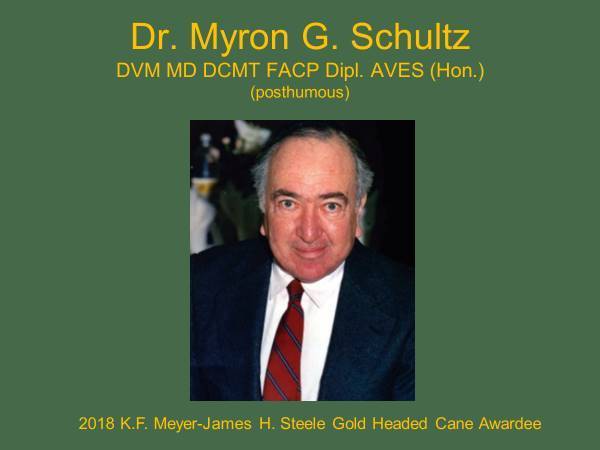
Myron (Mike) G. Schultz, DVM, MD, DCMT, FACP, Dipl. AVES Hon. (posthumous) – Gold-Headed Cane was accepted by Dr. Schultz’s widow Mrs. Selma Schultz and son Joseph Schultz, MD
*Bernadette M. Dunham, DVM, PhD, Dipl. AVES Hon.
Hugh M. Mainzer, MS, DVM, FACE, Dipl. ACVPM, Dipl. AVES Hon.
AVES Honorary Diploma Awardees:
Georgette Wilson, DVM (unable to attend)
Candace A. Jacobs, DVM, MPH
Lorin D. Warnick, DVM, PhD, Dipl. ACVPM]
Mary Leigh Morris Merrill, MHS PhD(c)
Willie M. Reed, DVM, PhD, Dipl. ACVP, Dipl. ACPV
Robert M. Smith, DVM, PhD, MS
Juan Lubroth, DVM, PhD, ACVPM (unable to attend)
Peter J. Timoney, MRCVS MS PhD FRCVS (unable to attend)
Sarah Keller White, MPH PhD (unable to attend)
*Dr. Dunham https://publichealth.gwu.edu/departments/environmental-and-occupational-health/bernadette-dunham is also a member of the One Health Initiative team’s Advisory Board http://www.onehealthinitiative.com/advBoard.php.
|
|
| American Veterinary Epidemiology Society Announces 2018 K.F. Meyer/James H. Steele Gold Headed Cane and Honorary Diploma Awards Today - Monday, July 16, 2018 |

American Veterinary Epidemiology Society
Sole Sponsor of the AVES since 1964

July 16, 2018 – Today, the American Veterinary Epidemiology Society (AVES) http://www.avesociety.org/ meets at the American Veterinary Medical Association’s (AVMA) convention in Denver, Colorado to announce and present the coveted/prestigious 2018 K.F. Meyer/James H. Steele Gold Headed Cane and Honorary Diploma awards http://avesociety.org/awards/gold-headed-cane. This year’s awards to be presented by AVES President, Dr. Craig N. Carter, director and professor of epidemiology http://www.uky.edu/coldstream/News/craig-carter-named-president-american-veterinary-epidemiology-society at the University of Kentucky Veterinary Diagnostic Laboratory http://vdl.uky.edu/Home.aspx.
AVES Mission and Vision Statements:
“The mission of the American Veterinary Epidemiology Society (AVES) is to advance the field of veterinary epidemiology and public health in the spirit of One Health through educational symposia and the recognition of leaders and students.
The vision of the American Veterinary Epidemiology Society (AVES) is to help improve the quality of life for all people and animals through the science-based One Health principles as fathered and embraced by Drs. Karl F. Meyer and James H. Steele.”
The American Veterinary Medical Association, founded in 1863, is a not-for-profit association representing more than 91,000 U.S. veterinarians working in private and corporate practice, government, industry, academia, and uniformed services. Wikipedia
|
|
| Editorial: The British Medical Journal, "Healthy people, healthy animals, and a healthy environment: One Health" - Friday, July 13, 2018 |
|
|
| Harmful algal blooms are a One Health issue... - Thursday, July 12, 2018 |
|

|
|
Centers for Disease Control and Prevention | National Center for Emerging and Zoonotic Infectious Diseases | One Health Office
|
|
|
|
|
 Summer is often a time for picnics, ballgames, and backyard fun. But it’s also when algae and cyanobacteria are more likely to overgrow in rivers, lakes, and oceans, resulting in harmful algal blooms (HABs). Summer is often a time for picnics, ballgames, and backyard fun. But it’s also when algae and cyanobacteria are more likely to overgrow in rivers, lakes, and oceans, resulting in harmful algal blooms (HABs).
HABs are a One Health issue because they can produce poisons that are dangerous to people, animals, and the environment. HABs can contaminate the environment, drinking water, recreational water, and food. Exposure to HAB toxins through water, food, or air may cause a range of mild to severe symptoms in both humans and animals.
CDC and partners are working to learn more about HABs and how to prevent and control the illnesses they can cause.
Updated health promotion materials are now available from CDC to help raise awareness about HABs this summer:

|
|
|
|
|
|
|
Find updates about One Health, diseases spread between humans and animals, new infographics, and much more on our homepage.
|
|
| Sitting Down With… [Dr.] Richard M. Linnehan, Veterinarian/Astronaut, Houston, USA - The Pathologist, June 2018 ["...how important the concept of ONE HEALTH is..." - Sunday, July 08, 2018 |

About this Article, Published in Issue #0618 SEE: https://thepathologist.com/issues/0618/the-astropathologist/
The Pathologist’s June issue covers what we gain from death! We speak to a team of experts behind human decomposition facilities to dig into how the dead can breathe life into research and provide vital forensic clues. We also delve into measuring the risk of Alzheimer’s disease, detecting malaria in mosquitoes with NIRS, how AI can aid healthcare, using methylation biomarkers to assist prognosis, the lab of the future, and much more. Plus, we sit down with astronaut and veterinary pathologist Richard M. Linnehan to discuss his career on and off the planet.
Sitting Down With… [Dr.] Richard M. Linnehan, Veterinarian/Astronaut, Houston, USA
“... When you look down at our planet from space, you realize that everything that seems so big and infinite… isn’t. It made me realize just how important the concept of “One Health” is. For instance, I’m a veterinarian, so I do comparative pathology – avian, reptile, amphibian, mammalian, human, even invertebrate – but most healthcare professionals focus only on humans. “One Health” brings us back to the idea that it’s all connected. Disease entities don’t stick to a single organism or environment; they move between them. The planet is smaller than we think. It’s a closed ecosystem, and everything that lives will eventually, in some way, affect everything else. ...”
June 2018
What initially prompted you to study veterinary pathology?
I was always interested in disease processes and epidemiology, but what sparked my interest in veterinary medicine was working for a local equine and large animal veterinarian in high school. I thought it was really cool that a human could actually help animals that big. I was interested in human medicine, too, but I was so intrigued by the veterinary side – especially exotic animals – that I decided to take that route.
I did my veterinary residency in comparative pathology and exotic animal medicine, and then did research and clinical work with zoo animals for several years. My main interest, even then, was in marine mammals and related ecosystems. I met the head of the US Navy’s marine mammal program while in veterinary school, and I wanted to be the program’s main veterinarian. Even though I had stayed in touch and geared my residency and extracurricular activities toward marine mammal work, I couldn’t believe it when I got the job!
The program involved training teams of sea lions and dolphins to perform underwater searches – they were much better than human divers. The animals were never in danger, of course; we just relied on them to detect and report potential hazards. In fact, they were better taken care of medically and nutritionally than most people! We also did some pretty cool research – studies on reproduction, longevity, nutrition, and many other things.
How did that lead to a career as an astronaut?
Before I applied to veterinary school, the only other thing I had ever wanted to be was a fighter pilot. I was accepted into the Air Force and veterinary school at the same time, and my advisor convinced me to choose the latter. During my studies, I used to watch the shuttle launches and ask myself, “How can I still fly?” And I figured that, if the space program was sending up mission specialists, doctors, physicists, and geologists, they’d need a veterinarian as well.
I interviewed with them (for which I can thank my experience as a deploying military marine mammal veterinarian) and, in 1992, they called me to say, “Would you like to be an astronaut?” Well – of course I would!
When you look down at our planet from space, you realize that everything that seems so big and infinite… isn’t. It made me realize just how important the concept of “One Health” is. For instance, I’m a veterinarian, so I do comparative pathology – avian, reptile, amphibian, mammalian, human, even invertebrate – but most healthcare professionals focus only on humans. “One Health” brings us back to the idea that it’s all connected. Disease entities don’t stick to a single organism or environment; they move between them. The planet is smaller than we think. It’s a closed ecosystem, and everything that lives will eventually, in some way, affect everything else.
What was your role on your missions?
My first mission, STS-78, was a life and microgravity sciences mission in the Spacelab where we looked at how various biological processes work in space. We looked at the differences in how biological systems function in zero or microgravity versus normal gravity. Everything that has ever lived on Earth has evolved in a 1 G gravity field, so when you take that away, how do things respond?
The second flight – STS-90, or Neurolab – was much more involved. We were looking at nervous system disturbances brought on by spaceflight. We had a vast array of animals – crickets, rodents, even oyster toadfish. Fish are kind of wild because their neutral buoyancy means that they live in a pseudo-microgravity environment – but they rely on gravity to tell them up from down. So how do they maintain buoyancy and navigation in space?
We also liked to joke that we had four big primates on board on whom we performed most of our experiments – us. I was pleased to have the opportunity to use my veterinary degree and pathology training to help the future survival of humanity. If we can’t figure out how to keep humans healthy and strong in space, then we’re not going to go. We won’t travel long distances to other planets, because by the time we get there, we’re going to be so unhealthy and so discombobulated that we won’t be able to function. I hope our operational studies will one day help humans take to the stars.
My final two missions were not life sciences-related, and allowed me to venture into the world of spacewalking. On STS-109, we rendezvoused with, repaired, and upgraded the Hubble Space Telescope. That was an awesome flight experience and a great mission. My last flight, STS-123, was to the International Space Station, where I and my spacewalk team helped build the space station. We installed the Japanese laboratory, called Kibo, and a giant robot called the Special Purpose Dexterous Manipulator that moves around the station and replaces worn-out parts.
What do you think is the most underrepresented aspect of pathology?
I think it’s comparative pathology – the link between disease processes in humans, animals, and the environment. We haven’t thought about it as much as we should because we’re too focused on our own species, so we don’t always consider that the same organisms and errors cause problems to other species as well, even though the presentations may be different to our own. We must remember that it’s all interrelated.
Permission to reprint granted to the One Health Initiative website July 8, 2018 by:
Michael Schubert, Editor | Texere Publishing Limited, t: 01565 745 193 | www.thepathologist.com
|
|
|
|
|
|
|


