|
|
 |
|
One Health News |
| |
|
| |
| Found 1196 Matching Results. View archived News Here. |
|
|
|
| One Health Initiative Autonomous pro bono Team: April 2020 - Saturday, April 25, 2020 |
One Health Initiative Autonomous pro bono Team: April 2020
Laura H. Kahn, MD, MPH, MPP ▪ Bruce Kaplan, DVM ▪ Thomas P. Monath, MD ▪ Lisa A. Conti, DVM, MPH ▪ Thomas M. Yuill, PhD ▪ Helena J. Chapman, MD, MPH, PhD ▪ Craig N. Carter, DVM, PhD


Lisa A. Conti, DVM, MPH
Thomas M. Yuill, PhD


Helena J. Chapman, MD, MPH, PhD

Craig N. Carter, DVM, MS, PhD |
|
| Expert says coronavirus exposed ways we can prepare for next pandemic - Friday, April 24, 2020 |
Expert [Gerald Parker, DVM, PhD https://iiad.tamu.edu/gerald-parker-dvm-ph-d-m-s/] says coronavirus exposed ways we can prepare for the next pandemic
Expert says coronavirus exposed ways we can prepare for the next pandemic
WPEC
Dr. Gerald Parker https://vetmed.tamu.edu/news/press-releases/texas-am-appoints-dr-gerald-parker-as-associate-dean-of-global-one-health/ , the current Associate Dean of Global One Health at Texas A&M University and former Principal Deputy Assistant Secretary for ...
SEE: https://cbs12.com/news/local/expert-says-coronavirus-exposed-ways-we-can-prepare-for-the-next-pandemic
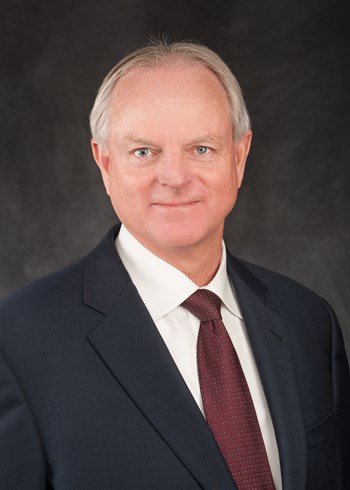
Dr. Gerald Parker |
|
| Medical experts have a plan to prevent next epidemic-it's called 'One Health' - Thursday, April 23, 2020 |

Medical experts have a plan to prevent next epidemic –it’s called ‘One Health’
· Health groups have a model to help prevent epidemics, using lessons learned from wildlife outbreaks
· Approach requires collaboration among all health disciplines and governments
Simone McCarthy
Published: 12:59pm, 23 Apr, 2020
SEE: https://www.scmp.com/news/china/society/article/3081192/medical-experts-have-plan-prevent-next-epidemic-its-called-one
“... *Gregory Gray [MD, MPH], a professor of infectious diseases from Duke University in the United States, runs the Duke One Health Network, which works on One Health-based research and training projects around the world.
Gray is calling for Covid-19 testing to be done not only in laboratory settings but in meat production facilities where animals may be more stressed and already have other respiratory diseases, potentially making them more vulnerable.
“What if [the virus] is silently causing infections and being amplified in pork or poultry production?” he said. “What if Sars-CoV-2 [the coronavirus] is silently multiplying in pigs and causing farmers to be at increased risk? We don’t know, but it’s something we would like to look at and rule out, and to do so we need to employ a One Health technique.”
In the past two decades, One Health has created more of an awareness of these intersections between human, animal and environmental health, and helped build connections across fields, experts say. But problems often arise at government levels when bureaucrats focus on protecting their own turf. ...”
*Dr. Gray is a member of the One Health Initiative Advisory Board http://www.onehealthinitiative.com/advBoard.php
|
|
| Press Releases on the Confirmation of COVID-19 in Two Pet Cats in New York - APRIL 22, 2020 - Wednesday, April 22, 2020 |
April 22, 2020
Press Releases on the Confirmation of COVID-19 in Two Pet Cats in New York
U.S. Centers for Disease Control and Prevention (CDC) https://www.cdc.gov/media/releases/2020/s0422-covid-19-cats-NYC.html
U.S. Department of Agriculture (USDA) https://content.govdelivery.com/accounts/USDAAPHIS/bulletins/287d882
|
|
| A Pandemic like COVID-19: Locusts in East Africa - April 22 2020 - Wednesday, April 22, 2020 |

|
|
| How does a pandemic impact our relationship with food? A new Penn survey seeks insights - April 21, 2010 - Tuesday, April 21, 2020 |
FOR IMMEDIATE RELEASE – April 21, 2020:
Media Contact:
Hannah Kleckner Hall
Associate Director of Communications
University of Pennsylvania School of Veterinary Medicine
kleck@vet.upenn.edu | 610.925.624
Original release can be viewed HERE. https://www.vet.upenn.edu/about/press-room/press-releases/article/how-does-a-pandemic-impact-our-relationship-with-food-a-new-penn-survey-seeks-insights
How does a pandemic impact our relationship with food? A new Penn survey seeks insights
A newly launched internet survey led by researchers at the University of Pennsylvania looks to explore the multidimensional impact that the novel coronavirus (COVID-19) has had on our collective relationship with food.
Comprised of faculty from Penn’s School of Veterinary Medicine (Penn Vet), School of Nursing (Penn Nursing), and School of Arts and Sciences (SAS), the research team is setting out to better understand the role of food in household dynamics before and during the pandemic, as well as how the current COVID-19 environment could impact our viewpoints of food in the future.
“Food plays a multifaceted role in our lives; it sustains us, it comforts us, and it brings us together,” said Dr. Zhengxia Dou, professor of agricultural systems within the Center for Animal Health and Productivity (CAHP) at Penn Vet. “Our hope is to learn more about how the pandemic environment has altered how we view its respective meanings while also objectively assessing the current state of our food systems.”
Participants are asked to consider how the pandemic environment has impacted their household’s grocery shopping, in-home cooking, and family eating together routines.
By examining household habits in frequency of food trips, availability of food and other essential products at the store, as well as changes in purchasing habits and use of food, the team looks to better understand the broader, systemic effects that the pandemic has had on our food systems – identifying both areas of resiliency and improvement.
“Ultimately, we hope to use this data to design and implement more insightful response plans for the future,” said Dou.
All participant responses are confidential, and anyone over the age of 18 is able to partake in the survey. In total, the survey takes roughly 10 minutes to complete.
To complete an anonymous response, please visit https://tinyurl.com/cv19food.
Investigators on this study include Penn Vet’s Dr. Zhengxia Dou, Dr. Dave Galligan, Dr. Darko Stefanovski, Dr. Ting Chen, and Margy Lindem; Dr. Ariana Chao, School of Nursing; and Dr. Paul Rozin, School of Arts and Sciences.
About Penn Vet
Ranked among the top ten veterinary schools worldwide, the University of Pennsylvania’s School of Veterinary Medicine (Penn Vet) is a global leader in veterinary education, research, and clinical care. Founded in 1884, Penn Vet is the first veterinary school developed in association with a medical school. The school is a proud member of the One Health initiative, linking human, animal, and environmental health.
Penn Vet serves a diverse population of animals at its two campuses, which include extensive diagnostic and research laboratories. Ryan Hospital in Philadelphia provides care for dogs, cats, and other domestic/companion animals, handling nearly 35,000 patient visits a year. New Bolton Center, Penn Vet’s large-animal hospital on nearly 700 acres in rural Kennett Square, PA, cares for horses and livestock/farm animals. The hospital handles nearly 5,500 patient visits a year, while the Field Service treats more than 38,000 patients at local farms. Playing an important role in the development of novel approaches to food animal production, New Bolton Center’s campus includes a swine center, working dairy, and poultry unit that conduct valuable research for the agriculture industry. For more information, visit www.vet.upenn.edu. |
|
| Why We Need the World Health Organisation Now More Than Ever - Monday, April 20, 2020 |
THE WIRE SCIENCE@THEWIRESCIENCE
Why We Need the World Health Organisation Now More Than Ever
https://science.thewire.in/health/why-we-need-the-world-health-organisation-now-more-than-ever/
The Wire
These various frameworks are combined into a One Health initiative to account for the intimate interactions between people, animals, and plants in ...
“... As for R&D and sharing knowledge, the recommendations argue for reducing impact of pandemics, speeding up commercial production of vaccines, increasing investment in medical R&D and building capacity to deliver medical and pharmaceutical goods. Understanding feedback loops between human and animal health are essential for advancing pandemic knowledge. ‘One health’ research programmes – which treat human, environmental and animal health together – must focus on understanding the emergence, prevention, detection and control of pandemics. ...”
|
|
| Infectious disease: Making — and breaking — the animal connection: Q & A with Jonna Mazet, DVM, PhD, UC Davis Executive Director, One Health Institute (USA) - Friday, April 17, 2020 |
A treasure trove of valuable One Health concept/approach information vis-à-vis the current COVID-19 pandemic challenge...

Knowable Magazine is from Annual Reviews, a nonprofit publisher dedicated to synthesizing and integrating knowledge for the progress of science and the benefit of society.
Infectious disease: Making — and breaking — the animal connection
We know pathogens from other species can endanger us. Scientists are better equipped than ever to do something about it, but political buy-in is crucial.
By Tim Vernimmen 04.16.2020
Infectious disease: Making — and breaking — the animal connection
“Most of the emerging diseases that threaten us humans — including SARS-CoV-2, the virus causing the Covid-19 pandemic — are zoonotic, meaning the microorganisms that cause them come from another animal. In an era of increasing urbanization, it may seem that many of us are keeping wild animals at safe distances. But the intricate network of global connections in the modern world, and the number of people living on the margins of humanity’s ever-expanding habitat, mean that we may never have been as accessible to ambitious new pathogens as we are today. ...”
Q & A with prominent epidemiologist and veterinarian, Dr. Jonna Mazet https://en.wikipedia.org/wiki/Jonna_Mazet & https://ohi.vetmed.ucdavis.edu/people/jonna-mazet
READ: https://www.knowablemagazine.org/article/health-disease/2020/animal-infectious-disease-connection |
|
| Rutgers Experts Available to Discuss Environmental Protection During COVID-19 Crisis - Thursday, April 16, 2020 |
Rutgers Experts Available to Discuss Environmental Protection During COVID-19 Crisis
... wastewater-based epidemiology, combined sewer overflows, the One Water movement, the One Health Initiative and private well water quality.
|
|
| Rep. Schrader [and Rep. Yoho] Urges Swift Passage of Bipartisan Pandemic Prevention Legislation [The Advancing Emergency Preparedness Through One Health Act of 2019, HR 3771] - Thursday, April 16, 2020 |
Rep. Schrader Urges Swift Passage of Bipartisan Pandemic Prevention Legislation
[One Health legislation: “The Advancing Emergency Preparedness through One Health Act of 2019]
For Immediate Release
https://schrader.house.gov/newsroom/documentsingle.aspx?DocumentID=392783
April 15, 2020
Contact: Larkin Parker, 202-225-5711
Rep. Schrader Urges Swift Passage of Bipartisan Pandemic Prevention Legislation
WASHINGTON, D.C. –Congressman Kurt Schrader (D-OR) and Rep. Ted Yoho (R-FL) led a letter to House of Representatives leadership urging inclusion of their bipartisan Advancing Emergency Preparedness Through One Health Act of 2019, HR 3771, in next Coronavirus response bill. Both Representatives are veterinarians and co-chairs of the Veterinary Medicine Caucus.
“This bipartisan legislation will dramatically strengthen our country’s coordinated responses to zoonotic diseases,” said Rep. Kurt Schrader. “The health of humans is deeply connected to animal and environmental health. The United States must be better prepared for the next pandemic and this legislation will help ensure that we are. I am hopeful that this critical legislation will be included in the next Coronavirus response and recovery bill.”
“Previously, President George W. Bush and industry leaders like Bill Gates have forewarned that our government needs to be proactive in preparing for the next pandemic,” said Rep. Ted Yoho. “We failed. It’s time to act. The transmission of disease from animals to humans is common, and, as we are currently experiencing with COVID-19, can have devastating effects on the global population and economy. Now, more than ever, the One Health Framework is vital to coordinate federal activities around zoonotic disease prevention, preparation, and response. I am honored to join fellow large animal veterinarian, Rep. Kurt Schrader and concerned colleagues in a bipartisan effort to ask that congressional leadership incorporate our commonsense legislation into the next coronavirus response bill.”
“The COVID-19 pandemic demonstrates how closely animal health, public health and the environment are linked. As Congress considers the needs of public health infrastructure in light of the coronavirus, AVMA supports the creation of a national framework that would coordinate zoonotic disease preparedness and response,” said Dr. John Howe, AVMA President. We applaud the bipartisan Advancing Emergency Preparedness through One Health Act of 2019 sponsored by veterinarian Reps. Kurt Schrader and Ted Yoho that would direct the federal government to create a national One Health Framework for coordinated federal activities under the One Health Program.”
“The global COVID-19 pandemic that has gripped the world is a stunning example of why this legislation is so critically important,” said Dr. Andrew T. Maccabe, Association of American Veterinary Medical Colleges (AAVMC) Chief Executive Officer. “We simply cannot take a fragmented approach to solving the public health and food security threats emerging at the intersection of humans, animals and the environment. The veterinary medical profession has long understood that an integrated One Health approach is absolutely essential and that’s what this legislation will address. By increasing cooperation among the different agencies and secretariats involved in health and agriculture, we can leverage their strengths and make them more effective. There is no more powerful reminder of the urgency of doing this now than the epic struggle we face today.”
The Advancing Emergency Preparedness through One Health Act of 2019 would require the Department of Health and Human Services, Department of Agriculture, Centers for Disease Control and Prevention, Environmental Protection Agency, and other related agencies to create a national One Health Framework to coordinate all federal activities to prevent, prepare for, and respond to zoonotic disease outbreaks. Federal activities must be coordinated and well-funded so that we can prevent zoonotic outbreaks and respond to them quickly.
### |
|
|
|
|
|
|


