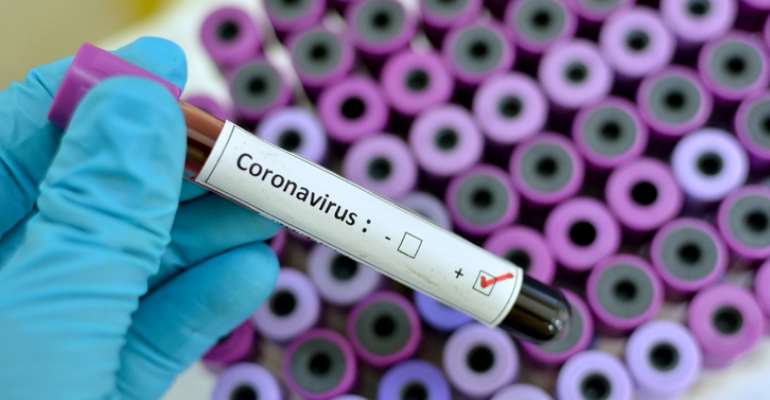
A life-threatening disease crosses from one species to another and humanity holds its breath. In the wake of the new coronavirus, we are all anxious now. Yet how many of us in the wider academic community are aware of the One Health Initiative?
The prospect of infection should be more than enough to persuade us that research and training in animal health, human health and environmental health need to be much better integrated. This is the core message of the One Health Initiative. Escaping from the silos, that is its project.
Launched in the United States in 2006, its scope is global, with a powerful focus on research, education and dissemination to policy-makers and the media. ...
Stewardship / Resistance Scan for Feb 21, 2020 - Center for Infectious Disease Research and Policy, Univ. of Minnesota (USA) - Saturday, February 22, 2020
The One Health Approach IN ACTION:
“... The One Health Network for the Global Governance of Infectious Diseases and Antimicrobial Resistance (GRIDD) will be co-led by York University and the University of Ottawa and will include a transdisciplinary team of researchers from the social sciences and the human, animal, and environmental health sciences. The network will be closely integrated with related European efforts. ...”
Stewardship / Resistance Scan for Feb 21, 2020
Canadian AMR center; Therapy for resistant lung infections
An Urgent Call to Make One Health Work for People and Our Planet - MEDICC REVIEW January 2020, Vol 22, No 1 / Editorial | Editors'-Choice - Friday, February 21, 2020
One Health Centre coming up at Nagpur to help animal origin diseases like corona - Friday, February 21, 2020
Healthcare
“... Explaining the ideas of One Health Centre, Dr Chaudhari said that so far, study of human health and animal health was done separately. "One Health approach however recognises that health of animals is closely linked with health of human beings," he said.
The research to be carried out at the One Health Centre will help scientists develop a vaccine in lesser time, when a new disease gets transmitted from animals to humans. ...”
One Health Centre coming up at Nagpur to help animal origin diseases like corona
Scientists say that there are about 830 diseases that can originate in animals and transmit to humans. The ICMR has given mandate to NIV and MAFSU to set up the One Health Centre, for which four acres of land has already been allocated. The Centre will study the different disease causing pathogens in domestic as well as wild animals for better preparedness to contain diseases that humans may get in future.
ByJayashree Bhosale, ET Bureau|Last Updated: Feb 21, 2020, 11.09 AM IST
Reminder: Frequent Media Expert Physician/Public Health Spokesperson for Coronavirus Epidemic (potential Pandemic) Threat Status in World Supports a One Health Approach - Wednesday, February 19, 2020
Reminder: Frequent Media Expert Physician/Public Health Spokesperson for Coronavirus Epidemic (potential Pandemic) Threat Status in World Supports a One Health Approach
CBS News February 16, 2020, 11:25 AM Transcript: Dr. Anthony Fauci on "Face the Nation," February 16, 2020
“….We have long embraced a one-health paradigm at NIAID, especially in the realm of emerging and re-emerging diseases, most of which are zoonoses and must be studied in the context of the ecosystems humans share with microbes, non-human hosts, vectors, reservoirs and other actors. Many of the research efforts about which I speak and write almost daily fall under the one health rubric…” https://goo.gl/nKVbFF
NC State Collaborating Center to Aid WHO [World Health Organization] in Combating Antimicrobial Resistance - Feb18 2020 - Wednesday, February 19, 2020
NC State Collaborating Center to Aid WHO [World Health Organization] in Combating Antimicrobial Resistance
February 18, 2020
For Immediate Release – NC State News, Raleigh, North Carolina (USA)
The World Health Organization (WHO) has designated North Carolina State University’s Department of Population Health and Pathobiology as a collaborating center. The new center will aid the WHO in its efforts to combat foodborne antimicrobial resistance (AMR) worldwide. Under the direction of department head Paula Cray, the collaborating center will take a holistic “one health” approach to identifying and combating emerging antibiotic-resistant bacteria in developing nations through enhanced surveillance of foodborne pathogens in animal populations....
Coronavirus: ECOWAS Health Ministers Issue Joint Preparedness
“...The communiqué called on countries to promote multi-sectoral national efforts using one-health approach to maximise impact. ...”
By News Desk
LISTEN 2 HOURS AGO
Health ministers from member countries of the Economic Community of West African States (ECOWAS) have issued joint regional preparedness plan for the prevention, early detection and control of the coronavirus outbreak.
A communiqué issued at the end of the one-day meeting of ECOWAS health ministers, organised by the West African Health Organisation (WAHO), charged member countries to implement robust measures to assure availability of critical medical supplies, including laboratory materials and personal protective equipment in the region. ...
“...The communiqué called on countries to promote multi-sectoral national efforts using one-health approach to maximise impact. ...”
The short introductory review on the publisher’s website generally reflects what this book is about.The following brief commentary uses their description while including some additional observations.
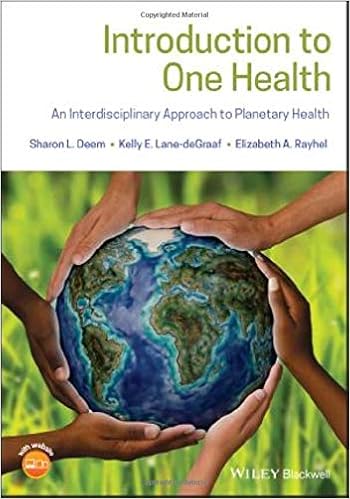
Introduction to One Health: An Interdisciplinary Approach to Planetary Healthoffers a reasonably good introduction to the exponentially expanding field of One Health in a refreshing erudite fashion; a vision of the planet’s health today and potentially in future are surveyed. Indeed, the book employs the journalist writer’s guide of the who, what, where, when, why, and how of the One Health concept/approach as it pertains to its critical utilization in helping to expeditiously and efficaciously combat global public health and ecological issues within concise definition guidelines viz. “One Health is the collaborative efforts of multiple disciplines working locally, nationally, and globally to attain optimal health for people, animals, plants and our environment.”
Some of the One Health movement’s notable historical landmarks and leaders involved in collaborative transdisciplinary endeavors during the past decade and earlier are discussed with interviews highlighting interesting individual “One Health” perspectives.By my count, the interviewees include six veterinarians (including one of the co-authors), three physicians, and eighteen other knowledgeable professional health oriented field representatives (including two co-authors of this book).
This book is a complementary addition to several other insightful, comprehensive One Health textbooks/journal articles available today, see: http://www.onehealthinitiative.com/animalHumans.php and https://www.onehealthcommission.org/en/resources__services/one_health_library/books/ .It is well worth reading and having available to students and faculty in schools of medicine, veterinary medicine and public health.Along with existing One Health literature, practicing veterinarians, physicians, other professional health scientists and researchers would do well to read this text.
Note - Dr. Deem’s Signature Block:
Sharon L. Deem, DVM, PhD, Dipl ACZM
Director, Institute for Conservation Medicine
Director, WildCare Institute Center for Chelonian Conservation
*Dr. Deemis a wildlife veterinarian, an epidemiologist, and the current director of the Institute for Conservation Medicine at the Saint Louis Zoo, St. Louis, Missouri (USA).Notably she gave an extraordinary TEDx talk in March 2018 as part of the “Think Well: HealthCare Out Loud” TEDx Gateway Event at the Sheldon in downtown, St. Louis.This short video is an overview of One Health, articulately sharing examples of how the health of all life is interconnected.See and listen tohttps://www.stlzoo.org/about/blog/2018/11/02/one-health-connecting-animal-human-and-environmental-health(scroll down for talk...).
Contents Manager/Editor One Health Initiative Website, Co-Founder One Health Initiative team/website, Sarasota, Florida https://goo.gl/zbVw2t
One Health Initiative Autonomous pro bono Team:
Laura H. Kahn, MD, MPH, MPP ▪ Bruce Kaplan, DVM ▪ Thomas P. Monath, MD ▪ Lisa A. Conti, DVM, MPH ▪ Thomas M. Yuill, PhD ▪ Helena J. Chapman, MD, MPH, PhD ▪ Craig N. Carter, DVM, PhD
Stewardship / Resistance Scan for Feb 14, 2020 from CIDRAP - Saturday, February 15, 2020
In a related development, the medical technology company BD (Becton, Dickinson and Co.) yesterday announced a $6 million contract with the Fleming Fund, the British aid program that helps low- and middle-income countries fight antimicrobial resistance.
Under the contract, BD said it will provide diagnostic equipment and informatics systems to help diagnose infections and guide physicians to prescribe and use antibiotics appropriately. The company is based in Franklin Lakes, New Jersey.
More than 70 labs in 19 countries will be provided with equipment to quickly detect bacteria and fungi in clinical specimens and blood and to test antimicrobial susceptibility, along with products for microbiology data management, the company said in its press release.
The program is funded by the United Kingdom Department of Health and Social Care.
"The Fleming Fund works to support 24 countries in the development of AMR surveillance systems, using the World Health Organization's 'One Health' approach," the BD release said. "One of the core activities for the Fleming Fund country grant program is to strengthen clinical bacteriology laboratories in order to identify and perform antimicrobial susceptibility testing (AST) on priority pathogens." Feb 13 BD press release
UK partners with Nigeria to battle antimicrobial resistance
The United Kingdom yesterday announced the launch of a partnership with Nigeria, worth £10.7 million, to fight antimicrobial resistance (AMR) by improving public health surveillance, upgrading laboratory equipment, and training technicians.
The program will be operated by the Fleming Fund, a UK Aid program that helps low- and middle-income countries battle AMR, the fund said in a news release. The fund is managed by the UK Department of Health and Social Care in partnership with Mott McDonald, the fund's grant management agent.
The Fleming Fund has appointed Development Alternatives Incorporation (DAI) to support Nigeria's AMR surveillance system, in collaboration with the Nigerian AMR coordination committee and other partners.
Project activities in Nigeria to date include investment in 18 laboratories across the country and the appointment of 10 professional fellows who are being trained in data management, microbiology, epidemiology, and biosafety to help fight AMR, according to the release. Feb 13 Fleming Fund press release
How to see the next viral threat coming...Published in THE HILL, Feb10, 2020 - Monday, February 10, 2020
How to see the next viral threat coming
By Gregory C. Gray [MD, MPH], opinion contributor — 02/10/20 02:30 PM EST 12
The views expressed by contributors are their own and not the view of The Hill
The rapid spread of the novel coronavirus has followed an eerily familiar pattern. First recognized just weeks ago in the city of Wuhan, China, the virus is suspected of having originated in animals and later began infecting humans, most likely through contact with an infected animal in a food market. By the time the world began to understand its threat, the virus had already reached multiple countries and hopped an ocean. It is now infecting tens of thousands of people and has caused more than 400 deaths.
In their efforts to contain the virus, public health officials have taken swift and comprehensive action, including quarantining people who may have been exposed to the virus and restricting travel to and from affected areas. Yet even these measures may not stop the virus’ spread entirely. ...
... In my research program, we are bringing together researchers in human health, veterinary health and environmental health to learn what happens at this human-animal interface. Our team is working on farms and in animal markets in multiple countries to detect and study viruses that pass among animals and sometimes sicken livestock workers and handlers. (To see an example of our work, watch this video of a recent project in Vietnam).
This emerging collaborative field, often called “one health,” integrates knowledge from several different spheres, including human health, animal health, environmental health and agricultural businesses. The approach is gaining traction among academics, government officials and international policymakers as the best way to approach complex problems such as emerging zoonotic diseases. But we need to do more to integrate this approach into how we prepare for viruses like the newly emerged coronavirus....